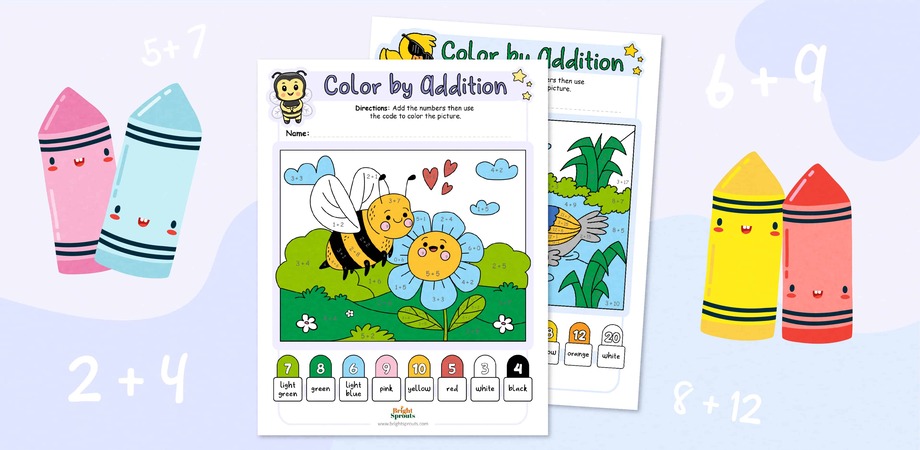
Memorizing essential math skills is vital but can be challenging for many students. Students need a lot of practice with addition facts. While worksheets and flashcards serve their purpose, repetitiveness can lead to boredom.
Addition color by number worksheets are an excellent activity for students to practice their math facts. Many kids enjoy coloring activities, and the allure of these worksheets lies in the fun reveal of a picture as they color.
Go ahead and print these addition coloring pages to keep your students engaged in memorizing addition facts.
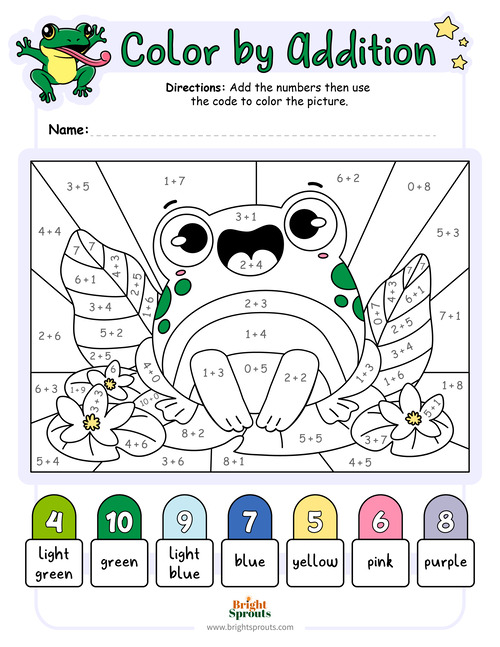
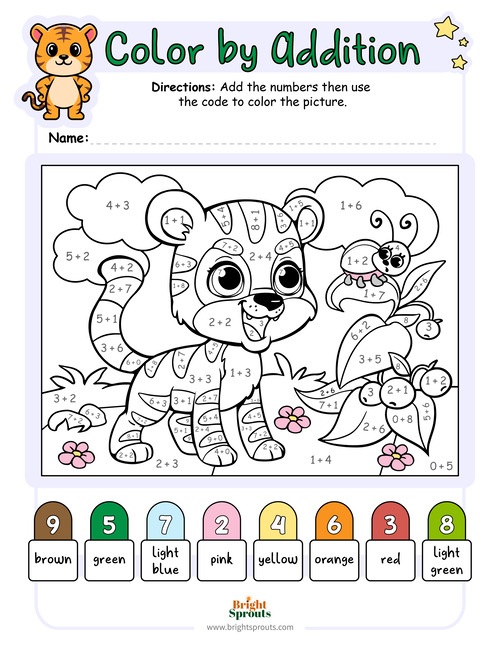
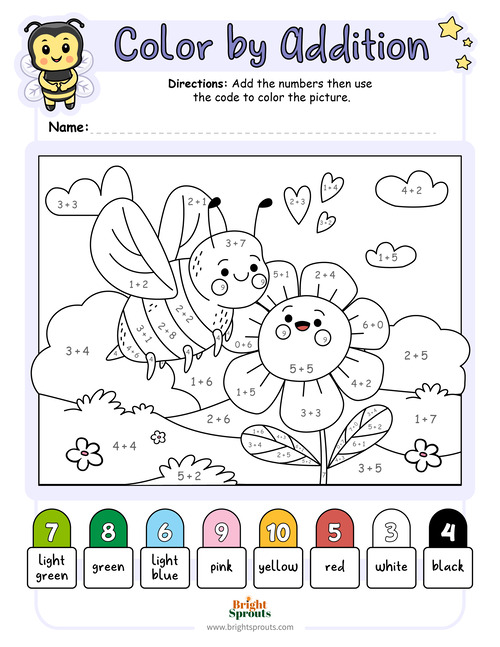
Single-Digit Sums Including 10 (1-10)
Students in kindergarten and first grade begin learning the fundamentals of addition and memorizing their facts. These sheets will help reinforce their memorization. Each printable sheet features fun animals to color and enough sums to give kids practice without being overwhelmed.



Double-Digit Sum Up to 20 (11-20)
Double-digit sums are a little more complicated and are learned after kids know their lower math facts well. These color-by-number addition sheets include fun, colorful pictures with more advanced sums.


How to Use Addition Color by Number Worksheets
There are several strategies for using these addition color by number worksheets with your students. In addition to handing them out for practice inside the classroom, you can also put them in a center, send them home for homework, or put them in an early finishers folder.
Pull all the papers together in a binder or folder to create addition coloring books for your students. These sheets can also serve as supplementary practice material for students who need some extra practice.
Addition Strategies
Addition color-by-number worksheets work best when combined with a wide range of addition strategies. Below are more techniques for helping your students learn addition facts.
Using manipulatives can help students get a visual representation of addition. Manipulatives are great for making sure students understand the concept. You can use almost any small item.
Addition games like Bingo, Matching, Around the World, and more make learning addition fun and help students recall their facts quickly.
Ten frames help students develop number sense and understand value. Use frames with two or more different-colored counters to give kids a great visual.
Resource: Printable Ten Frames
Make sure kids understand the commutative property. Have them represent addition and switch up the addends. Once students understand this property, they’ll be much faster at recalling facts.
Empower Students to Excel in Addition
Solid addition skills lay the foundation for more advanced math in the coming years. When students effortlessly recall their addition facts, they are well-positioned to tackle more intricate tasks.
These free addition color-by-number worksheets can help your students learn engagingly. Download them all and share them with your eager learners!